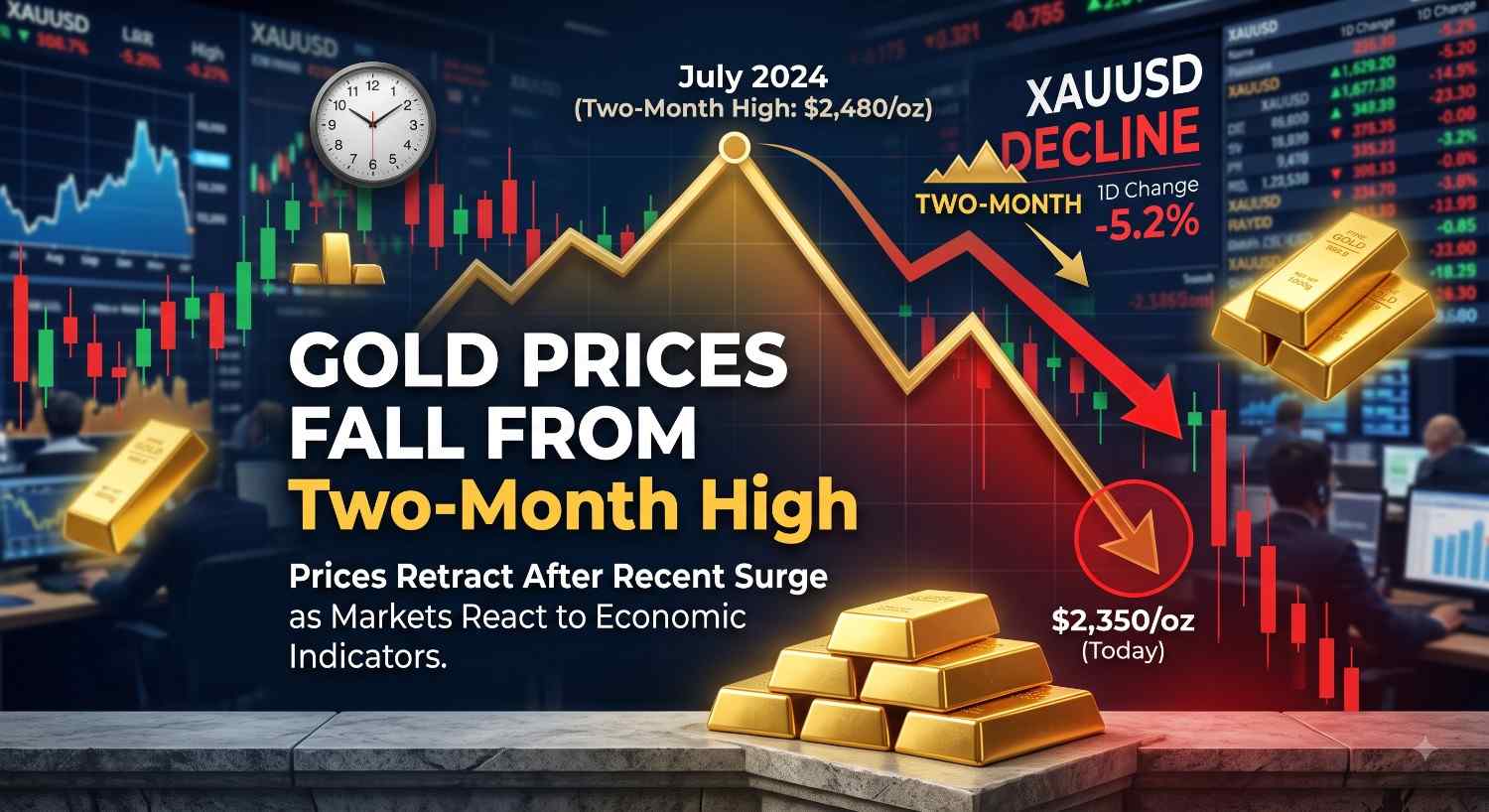
Gold Prices: Gold prices edged lower on Thursday as investors took profits following a strong rally that pushed the precious metal to a fresh two-month high. Softer US inflation data has reduced expectations for an imminent Federal Reserve interest-rate hike, providing underlying support for bullion.
At 09:22 ET (13:22 GMT), gold had fallen 0.4% to $4,393.12 an ounce, while another gold contract had declined 0.4% to $4,451.60 an ounce.
Despite Thursday’s pullback, the broader gold market remains supported by changing expectations for Federal Reserve policy, movements in the US dollar, geopolitical uncertainty and continued central-bank demand.
📉 Gold Price Pulls Back After Strong Rally
Gold briefly climbed to around $4,450 an ounce on Wednesday, reaching its highest level in two months before traders began locking in profits.
The latest decline appears to be largely driven by post-rally profit-taking rather than a major deterioration in the underlying factors supporting gold.
Investors have been closely watching US inflation data for clues about the Federal Reserve’s next interest-rate decision. The latest figures showed consumer price growth slowing to 3.4% from 3.5% in the 12 months to July, in line with market expectations.
On Thursday, a separate inflation indicator showed that US producer prices were unchanged month-on-month in July, adding to the focus on the country’s inflation trajectory.
🏦 Softer Inflation Changes Fed Rate Expectations
The inflation data has played an important role in shifting expectations for the Federal Reserve.
Markets were last pricing in roughly a 36% probability of a rate hike at the Fed’s September meeting, down from around 46% before the consumer-price data was released, according to CME FedWatch.
The Federal Reserve held interest rates in a range of 3.50% to 3.75% at its July meeting, although three policymakers dissented in favor of an increase.
For gold investors, the direction of interest rates remains crucial.
Gold does not generate interest income, meaning higher interest rates can increase the relative appeal of yield-bearing assets. Conversely, expectations for lower or less restrictive rates can provide support for bullion.
📊 Fed Chair Warsh’s Jackson Hole Comments in Focus
Investors are now looking ahead to Fed Chair Kevin Warsh’s comments at the Jackson Hole symposium later this month for additional clues about how policymakers may approach interest rates in the months ahead.
The uncertainty surrounding the Fed’s future policy path could keep gold prices volatile.
Max Baecker, President of American Hartford Gold, said Warsh’s approach could provide “more guesswork for the market.”
According to Baecker, limited guidance from the Fed could make gold increasingly sensitive to incoming economic data.
“Warsh’s limited guidance makes gold’s outlook more dependent on each new data point and more volatile in both directions,” Baecker said.
Why does the Fed matter for gold?
The Federal Reserve influences gold through interest rates, inflation expectations and the US dollar.
When investors expect higher interest rates, gold can face pressure because it does not pay interest. When expectations for tighter monetary policy decline, bullion can become relatively more attractive.
💵 Weaker US Dollar Offers Some Support
The US dollar also remains an important factor for the gold price today.
The dollar index, which tracks the greenback against a basket of major currencies, weakened slightly on Thursday.
A softer US dollar can support gold because the precious metal becomes relatively less expensive for buyers using other currencies.
That relationship means currency movements could remain an important driver of gold prices alongside Federal Reserve policy and economic data.
🌍 Strait of Hormuz Uncertainty Keeps Geopolitical Risks Elevated
Geopolitical developments are another factor keeping investors focused on gold.
Diplomatic efforts aimed at ending the Middle East conflict and reopening the Strait of Hormuz have shown little sign of an immediate breakthrough, leaving severe traffic restrictions in place along the strategically important waterway.
Crude oil prices are heading toward a one-week gain, adding another layer of uncertainty to the inflation and interest-rate outlook.
“Oil is influencing gold through inflation, interest rates and the Fed,” Baecker said.
Higher oil prices can potentially influence inflation expectations, which in turn can affect expectations for monetary policy and ultimately gold.
🏦 Central Bank Gold Buying Supports the Market
Central-bank purchases have also remained an important source of support for the gold market, particularly demand from China.
Baecker said gold demand is broadening as investors respond to structural risks, while interest rates, geopolitical developments and market momentum influence the pace of price movements.
Strong institutional and central-bank interest can provide an important longer-term support factor for gold, even when short-term traders take profits after a sharp rally.
🔮 Gold Price Outlook: What Happens Next?
The near-term gold price outlook is likely to depend on several major factors.
First, traders will continue monitoring incoming US economic data for evidence about inflation and the Federal Reserve’s interest-rate path.
Second, movements in the US dollar could either amplify or limit gold’s gains.
Third, geopolitical developments and oil prices could influence inflation expectations and safe-haven demand.
Finally, continued central-bank buying could provide underlying support if demand remains strong.
After reaching a two-month high, some profit-taking is normal. The key question for investors is whether gold can maintain its broader bullish momentum once the immediate selling pressure fades.
🧠 Key Takeaways
- 🥇 Gold prices fell 0.4% after reaching a two-month high.
- 💰 Traders appear to be taking profits following the recent rally.
- 📉 Softer US inflation has reduced expectations for an imminent Fed rate hike.
- 🏦 Federal Reserve policy remains a major driver for gold.
- 💵 A weaker US dollar is helping limit downside pressure on bullion.
- 🌍 Strait of Hormuz uncertainty continues to add geopolitical risk.
- 🏦 Central-bank purchases, including demand from China, remain an important support factor.
❓ Gold Price FAQs
Why is the gold price falling today?
Gold prices are falling as traders take profits after the metal reached a fresh two-month high. The decline comes despite supportive factors including softer US inflation, reduced expectations for an imminent Fed rate hike and a slightly weaker US dollar.
What is driving gold prices higher?
Gold has been supported by changing Federal Reserve rate expectations, inflation data, geopolitical uncertainty, movements in the US dollar and continued central-bank demand.
How do Federal Reserve interest rates affect gold?
Higher interest rates can put pressure on gold because bullion does not generate interest income. Expectations for lower or less restrictive rates can make gold relatively more attractive compared with interest-bearing assets.
Does a weaker US dollar support gold?
Generally, yes. Because gold is priced internationally in US dollars, a weaker dollar can make bullion cheaper for buyers using other currencies, potentially supporting demand and prices.
Why are investors taking profits in gold?
Investors often lock in gains after a sharp rally. Gold recently reached a two-month high near $4,450 an ounce, giving short-term traders an opportunity to secure profits.
What is the outlook for gold prices?
The near-term outlook will depend heavily on US economic data, Federal Reserve policy expectations, the US dollar, geopolitical developments and central-bank demand. These factors could contribute to continued volatility in both directions.
Is gold still supported by central-bank demand?
Central-bank purchases remain an important source of support for the gold market. Demand from major buyers, including China, is one of the structural factors investors are watching alongside interest rates and geopolitical risks.
📌 Bottom Line
Gold’s retreat from its two-month high reflects profit-taking after a powerful rally, but the broader market continues to watch supportive macroeconomic and geopolitical factors.
Softer US inflation, shifting Federal Reserve rate expectations, a weaker dollar and continued central-bank demand remain central to the gold price outlook. Investors will now focus on upcoming economic data and Fed commentary for clues about whether bullion can regain its recent momentum.