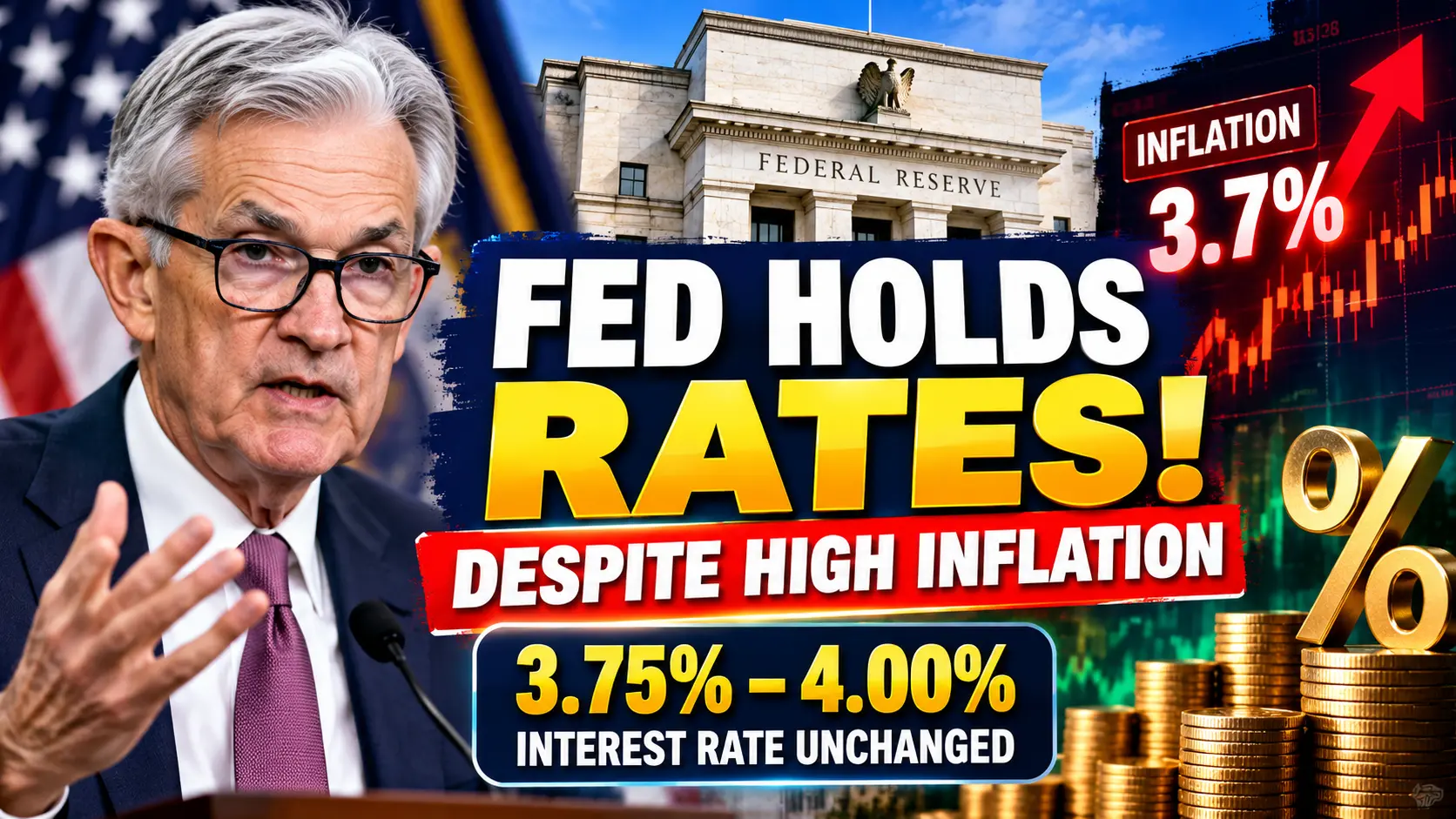
Federal Reserve Holds Interest Rates: 📊 The US Federal Reserve has kept its benchmark interest rates unchanged at 3.75%–4% following its October 28, 2026, policy meeting, despite persistent inflation and rising energy costs. The decision reflects the central bank’s attempt to balance price stability against the risks of making borrowing more expensive for American households and businesses.
The Federal Open Market Committee (FOMC) approved the decision by a 10–2 vote. Two policymakers preferred another quarter-percentage-point increase, highlighting continuing concerns about inflation.
The Fed’s decision comes after US consumer inflation accelerated to 3.7% in September, remaining significantly above its long-term 2% target. Higher oil and gas prices, geopolitical uncertainty, and rising transportation costs have complicated the central bank’s efforts to control prices.
For consumers, businesses, and investors, the decision means borrowing costs may remain elevated while policymakers assess incoming economic data. Attention is now turning to the Fed’s December meeting and whether additional rate increases could become necessary.
Federal Reserve Interest Rate Decision: Key Highlights
The October policy meeting produced several important developments:
- Interest rates: The Fed maintained its benchmark target range at 3.75%–4%.
- Voting outcome: The decision passed by a 10–2 vote.
- Inflation: Consumer prices increased 3.7% year over year in September.
- Inflation target: The Fed continues to aim for a 2% inflation rate over the longer term.
- Economic growth: Policymakers described economic activity as expanding at a strong pace.
- Next policy decision: Investors are watching for signals about a possible rate increase in December.
The decision does not mean the inflation problem has been resolved. Instead, it indicates that policymakers want to assess more information before deciding whether further monetary tightening is necessary.
📊 Federal Reserve Interest Rates: October 2026
Key figures from the Federal Reserve’s October 28, 2026, policy decision and the latest reported US inflation data.
| Economic Indicator | Reported Figure | Why It Matters |
|---|---|---|
| Federal Funds Target Range | 3.75%–4.00% | Benchmark range maintained by the Fed |
| Policy Decision Date | October 28, 2026 | Date of the FOMC announcement |
| Voting Outcome | 10–2 | Two policymakers preferred a rate increase |
| US CPI Inflation | 3.7% year over year | September 2026 consumer inflation |
| Fed Long-Term Inflation Target | 2% | Reference point for price stability |
| Average 30-Year Mortgage Rate | Approximately 7.4% earlier in October | Illustrates pressure on housing affordability |
| Next Major Policy Meeting | December 2026 | Investors will monitor new data and policy signals |
Note: Inflation refers to the year-over-year CPI change in September 2026. The mortgage rate is an approximate reported average from earlier in October, not a current quote. Future interest-rate decisions are uncertain.
Why Did the Federal Reserve Keep Interest Rates Unchanged?
The Federal Reserve faces a difficult economic balancing act. Inflation remains elevated, but higher interest rates can increase borrowing costs, discourage spending, and slow economic activity.
Keeping rates unchanged gives policymakers time to evaluate whether existing monetary restrictions are sufficient to bring inflation lower.
1. Inflation Remains Above the Fed’s Target
The US consumer price index increased 3.7% in September compared with the same month a year earlier, up from 3.4% in August.
This acceleration indicates that inflationary pressures remain significant. Higher energy prices have contributed to rising household expenses and business operating costs.
The Fed wants inflation to move sustainably toward 2%. If price increases remain elevated, policymakers may consider further interest-rate increases.
However, monetary policy affects the economy with a delay. Raising rates too aggressively can weaken demand and increase financial pressure on borrowers before inflation has fully responded.
2. Higher Interest Rates Could Increase Financial Pressure
Interest-rate increases influence mortgages, credit cards, car loans, and business financing.
Higher borrowing costs can make home purchases less affordable and discourage companies from investing in new projects. Consumers may also reduce discretionary spending when monthly loan payments increase.
Mortgage costs have already become a significant concern for American households. Reported average 30-year mortgage rates reached approximately 7.4% earlier in October before easing somewhat.
By keeping its benchmark rate unchanged, the Fed avoids adding another immediate increase to borrowing costs. However, the decision does not guarantee that mortgage rates or other market-based lending rates will decline.
3. Economic Growth Remains Resilient
The Fed must also consider whether the economy can withstand additional monetary tightening.
Economic activity has remained relatively strong, while unemployment has changed little. This resilience gives policymakers some room to maintain restrictive financial conditions.
At the same time, stronger economic activity can support consumer demand and allow businesses to pass higher costs on to customers.
The central bank therefore faces two competing risks: allowing inflation to remain elevated for too long or tightening monetary policy so aggressively that economic growth suffers.
How Rising Oil Prices Are Affecting US Inflation
🛢️ Energy prices have become a major concern for the Federal Reserve.
Geopolitical tensions and disruptions to energy supplies have contributed to higher oil and gas prices. These increases affect consumers directly through fuel expenses and indirectly through transportation, manufacturing, agriculture, and distribution costs.
Diesel prices are particularly important because trucks and other commercial vehicles transport goods throughout the economy.
When shipping becomes more expensive, businesses may raise prices to protect their profit margins. Those increases can eventually affect groceries, clothing, household products, and other everyday purchases.
Higher energy prices also make inflation more difficult to forecast because they can change rapidly in response to international developments.
Interest-rate increases can reduce demand over time, but they cannot directly restore disrupted oil supplies or eliminate geopolitical risks.
This limitation helps explain why the Fed must carefully evaluate the source of inflation before deciding how aggressively to respond.
What Does the Federal Reserve Decision Mean for US Consumers?
The decision to hold interest rates provides some stability for households, but it does not immediately solve affordability problems.
Mortgages and Home Loans
Mortgage rates depend on several factors, including longer-term bond yields, inflation expectations, and financial-market conditions.
Consequently, mortgage rates do not necessarily fall when the Fed leaves its benchmark rate unchanged.
Potential homebuyers should continue to evaluate property prices, borrowing costs, income stability, and monthly repayment obligations.
Credit Cards and Personal Loans
Many credit cards and some variable-rate loans are linked to benchmark interest rates. A pause can prevent another immediate policy-driven increase, but borrowing costs may remain high.
Consumers carrying expensive debt may benefit from reviewing their repayment strategies and avoiding unnecessary borrowing.
Savings and Deposits
Higher interest rates can support returns on some savings accounts and fixed-income products, depending on the financial institution and product terms.
However, deposit rates do not move in perfect alignment with the Fed’s benchmark rate.
Consumers should compare actual interest rates, fees, withdrawal restrictions, and inflation when evaluating savings options.
Will the Federal Reserve Increase Interest Rates in December 2026?
The December policy meeting has become an important focus for investors.
Some economists and market participants expect additional tightening if inflation remains stubbornly high. However, the October decision does not establish that another increase will definitely occur.
Policymakers will need to assess incoming inflation figures, employment conditions, economic growth, energy prices, and financial-market developments.
If inflation continues to accelerate or spreads into a wider range of goods and services, the argument for higher interest rates could strengthen.
Conversely, if inflation shows convincing signs of slowing, policymakers may prefer to maintain existing rates while monitoring economic conditions.
The important distinction is that a rate pause does not automatically signal an upcoming rate cut. The Fed may keep rates unchanged for an extended period or increase them again if the economic evidence warrants it.
Investors should therefore avoid treating any single meeting as a reliable prediction of the entire future policy path.
What Does the Fed’s Decision Mean for India?
🇮🇳 Although the Federal Reserve sets monetary policy for the United States, its decisions can influence financial markets worldwide, including India.
Impact on Indian Stock Markets
Changes in US interest-rate expectations can affect global investment flows.
When US yields rise, some international investors may prefer dollar-denominated assets over investments carrying greater perceived risk. This can put pressure on emerging-market equities.
A decision to hold rates may reduce immediate uncertainty, but Indian stock markets will continue to respond to domestic economic data, corporate earnings, valuations, and global developments.
Impact on the Indian Rupee
US interest rates and expectations about future policy can influence demand for the dollar.
If investors expect US rates to remain higher for longer, the dollar may receive support, potentially putting pressure on emerging-market currencies.
However, the rupee’s movement also depends on India’s trade balance, crude oil imports, foreign investment flows, and Reserve Bank of India policy.
The Fed’s decision alone cannot determine the direction of the rupee.
Impact on Gold Prices
Gold does not pay interest, so changes in bond yields and expectations about monetary policy can influence its attractiveness.
Lower expected yields may support gold under certain conditions, while higher yields can increase the opportunity cost of holding the metal.
Nevertheless, gold prices also depend on the dollar, geopolitical uncertainty, central-bank purchases, and investor demand.
Indian gold prices are additionally influenced by the rupee-dollar exchange rate and domestic market factors.
Federal Reserve Interest Rates: What Investors Should Watch Next
The October decision provides a useful reminder that financial markets respond to both policy decisions and expectations about future decisions.
Investors should monitor several indicators over the coming weeks:
- US inflation data: Determines whether price pressures are strengthening or easing.
- Employment reports: Help policymakers assess labour-market conditions.
- Oil prices: Influence fuel costs, transport expenses, and inflation expectations.
- Treasury bond yields: Reflect market expectations about interest rates and inflation.
- Federal Reserve communications: Offer clues about the direction of future policy.
- Global investment flows: Help explain changes in demand for US and emerging-market assets.
For long-term investors, it is important to avoid making decisions based solely on speculation about the next rate move.
A broader assessment of valuations, financial goals, risk tolerance, and investment time horizons is generally more useful than reacting to every short-term market headline.
Frequently Asked Questions (FAQs)
1. Did the Federal Reserve increase interest rates on October 28, 2026?
No. The Federal Reserve kept its benchmark interest-rate target range unchanged at 3.75%–4% following its October 28, 2026, meeting.
2. Why did the Fed hold rates despite high inflation?
The Fed chose to assess additional economic information before deciding whether further tightening was necessary. Policymakers must balance elevated inflation against the risks of increasing borrowing costs and slowing economic activity.
3. What is the US inflation rate in September 2026?
US consumer inflation reached 3.7% year over year in September 2026, up from 3.4% in August.
4. Will the Federal Reserve cut interest rates in December 2026?
A December rate cut is not guaranteed. Policymakers will assess inflation, employment, economic growth, and other indicators before deciding whether to hold, raise, or lower rates.
5. How do Federal Reserve interest rates affect mortgage costs?
Higher benchmark rates can contribute to higher borrowing costs, but mortgage rates also depend on bond yields, lender pricing, inflation expectations, and market conditions.
6. How can the Fed’s decision affect the Indian stock market?
The decision can influence global investment flows, dollar demand, bond yields, and investor risk appetite. However, Indian stock prices also depend on domestic economic conditions and company earnings.
7. Does a rate pause mean inflation is under control?
No. A pause means the central bank has chosen not to change its benchmark rate at that meeting. Inflation may remain elevated, and further increases may be considered if price pressures persist.
Conclusion: The Fed Faces a Difficult Inflation Balancing Act
The Federal Reserve’s decision to hold interest rates at 3.75%–4% highlights the challenges of controlling inflation without placing excessive pressure on the economy.
With US inflation at 3.7% in September and energy costs creating additional uncertainty, policymakers must decide whether existing financial conditions are sufficiently restrictive or further action will be required.
For households, the pause provides no guarantee of lower borrowing costs. For investors, it means that inflation data, bond yields, oil prices, and future Fed communications remain important factors to monitor.
The central question is whether inflation will begin moving convincingly toward the Fed’s 2% target. Until clearer evidence emerges, the path of US interest rates—and its implications for global financial markets—will remain uncertain.
Disclaimer: This article is for informational and educational purposes only. It is not investment, tax, or financial advice. Readers should evaluate their own circumstances and consult qualified professionals before making financial decisions.